
How to Prevent Moth Holes in Clothes
Moth holes rarely appear suddenly.
Often the damage begins quietly — a thinning patch in a favourite jumper or a small break in the fibres of a coat. But it isn’t the moth itself that damages clothing. It’s the larvae.
If you’re looking to prevent moth holes in clothes, it helps to understand what attracts them in the first place. Clothing moth larvae feed on keratin, a protein found in natural fibres like wool, cashmere, silk and alpaca. They are also drawn to garments that carry traces of sweat, skin oils or food.

Why moths damage clothes
It is not adult moths that cause damage — it is their larvae.
Clothing moth larvae feed on keratin, a protein found in natural fibres such as wool, cashmere, silk, and alpaca. This is why garments made from these materials are particularly vulnerable.
Moths are also attracted to clothing that carries traces of skin oils, sweat, or food residue, which makes worn garments especially appealing. The goal, therefore, is not only to deter moths but to remove the conditions that allow them to settle.
First principles to prevent moth holes in clothes
Consistent care is the most effective way to prevent moth holes in clothes over time.
Store garments clean. Even small traces of sweat or oils can attract moths.
Avoid long periods of undisturbed storage. Moths thrive in quiet, dark spaces.
Allow air circulation in wardrobes. Stagnant environments are ideal breeding grounds.
Inspect clothing periodically. Early signs often appear as thinning fabric or loose fibres.
Prevention is less about chemicals and more about regular care.
Protecting wool and cashmere
Knitwear made from wool and cashmere is the most common target for clothing moths.
To protect delicate knitwear:
Wash or dry clean items before seasonal storage.
Store folded garments in breathable cotton storage bags.
Avoid hanging heavy knits, which can stretch fibres.
Introduce natural deterrents such as cedar blocks or lavender sachets.
These scents discourage moths without introducing harsh chemicals.

Storing seasonal clothing
Clothing that is stored for long periods — winter coats, knitwear, occasionwear — is at higher risk.
For longer-term storage:
Use sealed storage containers or garment bags.
Add cedar or lavender as natural deterrents.
Ensure items are completely clean and dry before packing away.
Vacuum storage bags can offer additional protection but should be used carefully with delicate fabrics.
Signs of a moth problem
Moth activity is often noticed only after damage has occurred, but early signs include:
Small irregular holes in knitwear
Fine dust-like fibres near garments
Silky webbing on fabric surfaces
Small beige larvae in wardrobe corners or folds of clothing
If discovered early, the damage can often be contained.
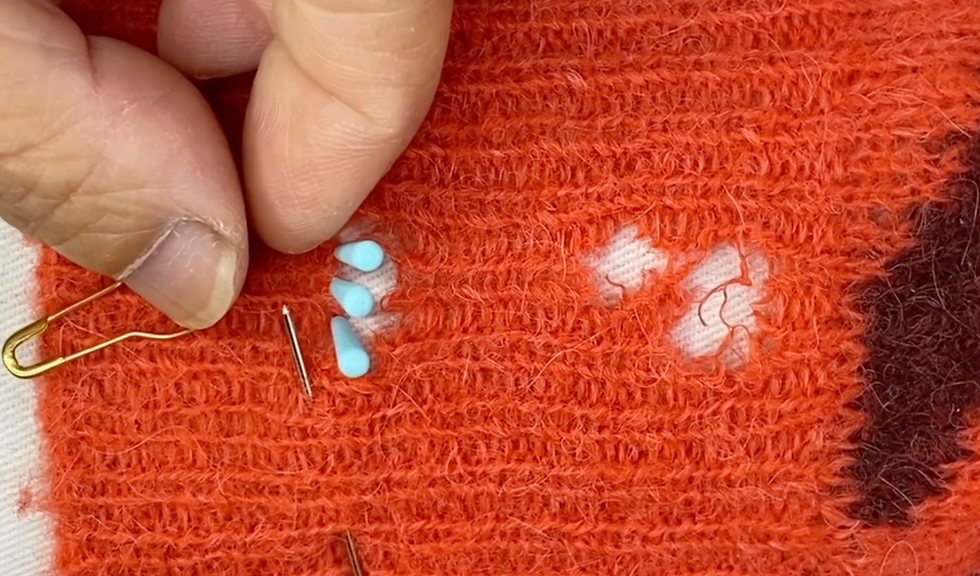
What to do if you find moth damage
If moth holes appear, the garment does not have to be lost.
Many natural fibre garments can be repaired using techniques such as invisible mending, reweaving, or darning, restoring strength to the damaged area while preserving the original fabric.
At The Seam, our Makers specialise in repairing moth damage in knitwear and woven garments, helping extend the life of pieces that might otherwise be discarded.
Request a quote to restore your garment and keep it in circulation for years to come.
I seem to get holes only in the front of jumpers - and at the wrists. Do you think that is moths or is it my watch and kitchen counter causing holes to start?
Reading this, I realized that maintaining your clothes is just like playing dordle: a moment of carelessness—missing the right "move" (like overlooking a stain or letting your closet get damp)—can spell disaster. But once you grasp the principles and adopt a consistent care routine, you can easily handle both "fronts" with ease!
I found the tips about keeping clothes clean and well aired really useful, especially for preventing those sneaky moth holes. On a lighter note, when I have some free time, Subway Surfers Online is a fun little way to unwind and relax.
Spent a few minutes with eggy car today and kept trying to beat my previous distance. The uneven roads make every jump feel a little risky.
This is such a helpful breakdown — I had no idea it was the larvae doing the damage, not the actual moths. The tip about not leaving clothes undisturbed for too long really hit home for me, since I tend to pack away my winter jumpers in April and forget about them until October. Speaking of checking things regularly, I've been using a mouse scroll test onlione lately to make sure my laptop's trackpad is still responsive, and it's made me think about how easy it is to overlook small issues before they become bigger problems — same goes for inspecting my wool sweaters for thinning patches. Definitely going to start rotating my storage and giving everything a quick check…